
Chimney Masters: Delivering Premier Gas Fireplace Service to Potomac, MD
Potomac, MD is synonymous with elegance, sprawling estates, and a lifestyle that values the finer things, including the warmth and ambiance of a well-maintained home. At Chimney Masters, we understand that your gas fireplace is central to that sense of comfort, offering instant heat and atmosphere with the flip of a switch. We take great pride in serving this community, ensuring that every gas insert, log set, and venting system operates as efficiently and reliably as possible. Our technicians are deeply familiar with the unique architectural styles found throughout Potomac, from historic farmhouses to modern luxury builds, and we tailor our services to meet the specific needs of each household. When you choose us, you are choosing a partner dedicated to preserving the warmth and value of your home.
How Does Burning Different Fuels Change the Need for Sweeping & Inspection?
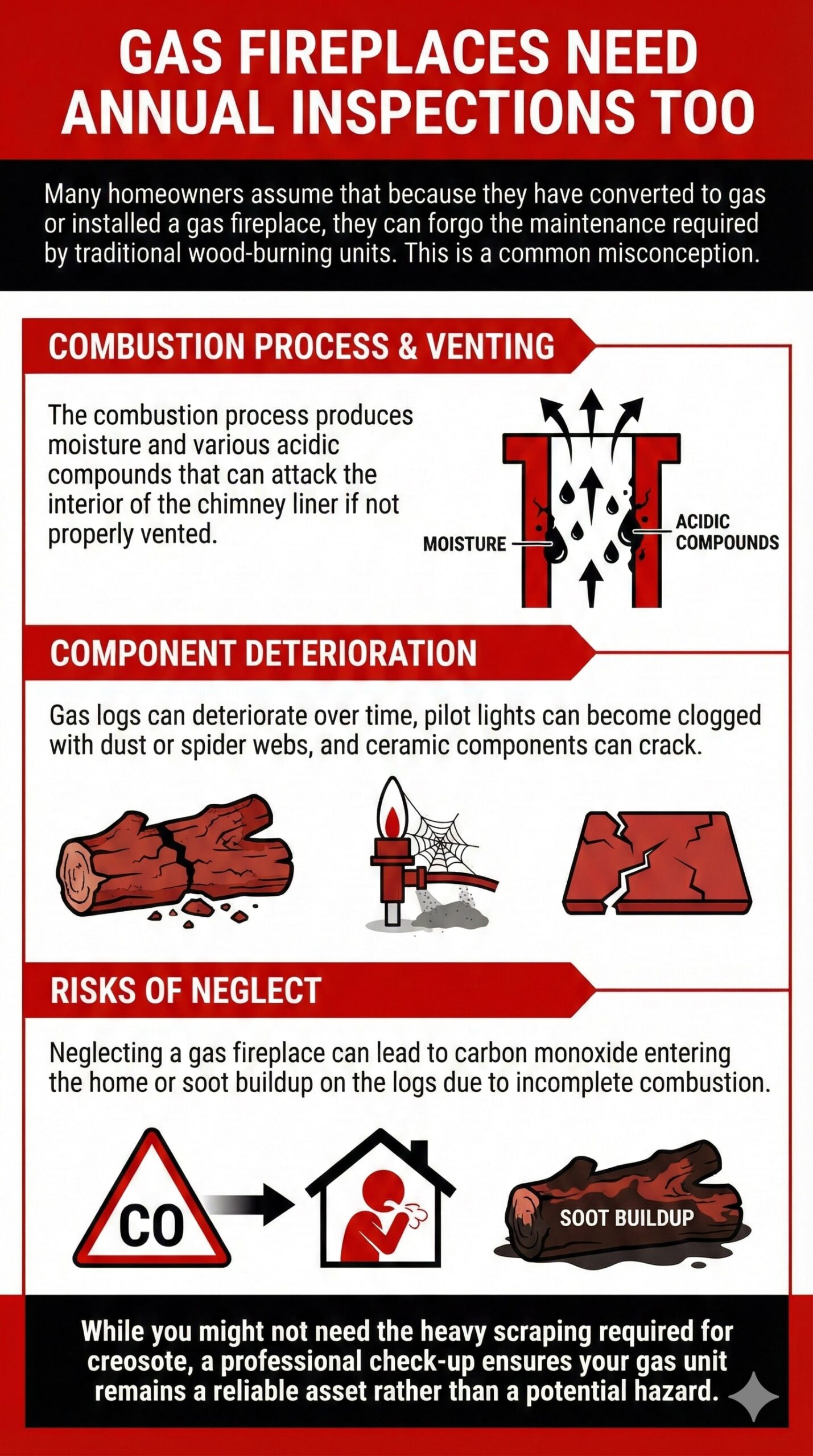
Many homeowners assume that because they have converted to gas or installed a gas fireplace, they can forgo the maintenance required by traditional wood-burning units. This is a common misconception. While the byproduct of combustion differs significantly between wood, pellets, and gas, the need for regular professional oversight remains constant to ensure the system operates safer and properly.
- Wood: Burning wood produces creosote, a highly flammable tar-like substance that coats the interior of the flue. This requires frequent, rigorous sweeping to prevent chimney fires. The rate of buildup depends on the wood moisture content and burning habits, but annual sweeping is the standard recommendation.
- Pellets: Pellet stoves burn much cleaner than cordwood, but they still produce ash and fine particulate matter. This ash can clog the venting system and mechanical parts of the stove, reducing efficiency and potentially leading to malfunctions.
- Gas: Gas fireplaces (both natural gas and propane) do not produce creosote. However, they are not maintenance-free. The combustion process produces moisture and various acidic compounds that can attack the interior of the chimney liner if not properly vented. Furthermore, gas logs can deteriorate over time, pilot lights can become clogged with dust or spider webs, and ceramic components can crack.
For our gas fireplace customers in Potomac, an “inspection” looks different but is just as critical. We focus on ensuring the structural integrity of the flue, checking for proper draft, and verifying that the gas connections are tight and leak-free. We also clean the burner ports and logs to ensure an optimal flame appearance and efficient heat output.
Neglecting a gas fireplace can lead to carbon monoxide entering the home or soot buildup on the logs due to incomplete combustion. While you might not need the heavy scraping required for creosote, a professional check-up ensures your gas unit remains a reliable asset rather than a potential hazard.
Serving the Community of Potomac, MD
Potomac, MD is more than just a collection of beautiful homes; it is a community rich in history and natural beauty. We love working in this area because of the evident pride residents take in their surroundings. It is a place where nature and luxury intersect seamlessly.
One cannot discuss Potomac without mentioning the Great Falls of the Potomac, a breathtaking natural landmark that draws visitors from all over the region. The C&O Canal National Historical Park offers our customers endless miles of towpath for cycling and walking, providing a serene escape just minutes from their doorsteps. We often find ourselves servicing homes near the Potomac Village, a hub of local commerce and community gathering that maintains a charming, small-town feel despite its proximity to the capital. From the rolling hills of the equestrian estates to the quiet, wooded neighborhoods, Potomac offers a peaceful respite from the bustle of city life. We are honored to contribute to the upkeep of such a magnificent area, helping neighbors keep their hearths warm during the chilly Maryland winters.
I Have a Gas Fireplace, So I Do Not Need a Chimney Sweep, Right?
This is perhaps the most common misconception we encounter in the field. While it is true that gas fireplaces do not produce the heavy, tar-like creosote associated with wood burning, they are certainly not maintenance-free. Neglecting a gas unit can lead to performance issues, unpleasant odors, and potential safety hazards involving proper venting.
- Debris Blockages: Even if you are not burning wood, your chimney flue is still open to the elements. Bird nests, twigs, and leaves can block the venting system. If the exhaust from your gas logs cannot escape due to a blockage, carbon monoxide can backdraft into your living space.
- Acidic Condensation: Gas combustion produces a significant amount of water vapor which is acidic in nature. If your liner is not sized correctly or if the draft is sluggish, this acidic moisture can settle on the interior masonry or the metal liner, causing corrosion and rust that you might not see until it is too late.
- Component Degradation: Ceramic logs can deteriorate and crumble over time, clogging the burner ports. Pilot light assemblies can become obstructed by dust or spiders, a surprisingly common cause of ignition failure.
- Soot Buildup: A properly burning gas set should not produce soot. If you see black soot depositing on your logs or glass, it indicates incomplete combustion. This requires immediate adjustment to the air-to-fuel ratio or log placement to ensure the unit runs cleaner.
We treat gas fireplace service as a comprehensive system check. We do not just look at the firebox; we inspect the entire venting path to ensure that dangerous fumes are leaving your home exactly as they should.
Can Nearby Construction or Landscaping Affect My Gas Fireplace Draft Years Later?
It is entirely possible for a gas fireplace that functioned perfectly for a decade to suddenly develop drafting problems due to changes in the surrounding environment. Draft is not a mechanical fan; it is a function of air pressure and temperature differences. When the airflow around your home changes, the performance of your chimney changes with it.
- The “Stack Effect” and Pressure: If a neighbor builds a large addition or a new home nearby, it can alter wind patterns, creating high-pressure zones that push air down your chimney rather than letting it rise.
- Mature Trees: Those saplings planted twenty years ago are now towering trees. If they overhang the chimney or block the prevailing wind, they can create turbulence (wind eddies) that interferes with the upward draft necessary to pull gas exhaust out of the flue.
- Home Renovations: Did you recently replace your windows with high-efficiency, airtight models? Or perhaps you installed a professional-grade range hood in the kitchen? These improvements tighten the “envelope” of your home. A gas fireplace that relies on natural draft might struggle to find enough makeup air to lift the exhaust, leading to spillage of combustion gases back into the room.
If you notice your pilot light blowing out frequently or your gas fireplace shutting itself off (tripping the spill switch), do not assume the unit is broken. It could be an environmental airflow issue. We analyze the entire picture, looking at your home’s pressure balance and exterior obstacles to find a solution that helps your system vent correctly again.
How Do Professionals Detect Invisible Leaks in Gas Liners?
With a wood fire, you might smell smoke if there is a leak. With a gas fireplace, the byproducts of combustion (primarily water vapor, carbon dioxide, and potentially carbon monoxide) are often odorless and invisible. This makes the integrity of the chimney liner even more critical, as you might not realize there is a breach until significant damage has occurred.
- Internal Camera Inspections: We utilize specialized camera systems that are lowered into the flue. These cameras provide a 360-degree, high-resolution view of the interior walls of the liner, whether it is clay tile, aluminum, or stainless steel.
- Identifying Corrosion: In metal gas liners, we look for pitting or small holes caused by acidic condensate. Even a pinhole leak can allow exhaust gases to migrate into the masonry structure or adjacent wall cavities.
- Joint Separation: In masonry chimneys venting gas, the mortar joints between clay tiles can erode. Our cameras allow us to see if the joints are intact. If they are not, heat and moisture can transfer to the surrounding home structure.
- Verification: This technology allows us to show you the problem. We do not just tell you the liner is compromised; we provide the visual evidence.
Finding these microscopic or hidden faults is vital for preventing long-term structural damage and ensuring that your family remains safer from exposure to exhaust fumes.
What Is That White Film on My Glass? Can Moisture Damage a Gas Fireplace?
One of the most frequent questions we receive from gas fireplace owners concerns a white, chalky haze that appears on the inside of the glass enclosure. This is often accompanied by concerns about moisture, as gas combustion produces a significant amount of water vapor.
- The White Haze: This film is usually a result of the combustion process. The minerals in the gas (sulfur and calcium) mix with the condensation that forms on the glass when the unit is first turned on. As the water evaporates, the minerals are left behind.
- Etching Risk: If this residue is not cleaned off regularly, the heat can bake it into the ceramic glass, causing permanent etching. Once the glass is etched, it cannot be cleaned and must be replaced. We recommend regular servicing to polish the glass and keep the view of the fire crystal clear.
- Moisture and Masonry: The water vapor produced by gas logs is acidic. If your chimney is unlined or if the liner is cold, this vapor condenses into liquid water before it leaves the stack. This acidic water eats away at mortar joints and bricks from the inside out.
- Freeze-Thaw Cycles: In Potomac winters, this moisture can freeze within the masonry. Water expands when it freezes, which can cause the face of the bricks to pop off (spalling) or the chimney crown to crack.
We ensure that your system is sized correctly to maintain high flue temperatures, which keeps the moisture in a vapor state until it exits the chimney. We also check for proper caps and flashing to prevent exterior rain from compounding the moisture problem.
Does Burning Gas Logs Cause Wear on the Firebox or Damper?
Many homeowners believe that because they are not tossing heavy logs into the firebox, the physical structure of the fireplace will last forever. However, the consistent heat and chemical byproducts of gas combustion create their own set of wear-and-tear issues that must be monitored.
- Damper clamps: In many gas log conversions, the damper must be permanently fixed in a slightly open position to prevent gas buildup. We check to ensure this clamp is secure and has not rusted or shifted, which is a critical safety requirement.
- Firebox Floor: We often see rust developing on the floor of the firebox or on the grate system. This is typically a sign that moisture is coming down the flue or that the chemical interaction from the combustion is reacting with the metal.
- Valve and Pilot Assembly: The mechanical heart of your gas fireplace is the valve. Over years of use, seals can dry out and diaphragms can wear, leading to small gas leaks. We use electronic “sniffers” to detect gas leaks that might be too small for you to smell.
- Thermocouples and Thermopiles: These sensors tell the gas valve that the pilot is lit. They are subjected to constant flame and eventually wear out. If your fireplace refuses to light, it is often one of these small but essential components failing.
Routine maintenance helps us catch these mechanical and structural fatigues before they result in a total system failure on the coldest night of the year.
Chimney Masters: Your Partner in Home Comfort
At Chimney Masters, we believe that your gas fireplace should be a source of joy and warmth, not a source of worry. Our team is dedicated to providing the Potomac, MD community with thorough, transparent, and technically superior fireplace repair services. We treat your home with the same care we would treat our own, ensuring that every valve is checked, every vent is clear, and every flame burns brightly.